
#1
Computer Information Systems College Nationally
Source: College Factual
Top 50
Best Value Bachelor’s in Artificial Intelligence and Machine Learning Nationally
Our state-of-the-art curriculum provides students with design skills and leadership preparation.
Learn MoreMeet Some of Our Students
Our program offers an array of specializations that prepare students to enter various areas of the information economy.
Apply Now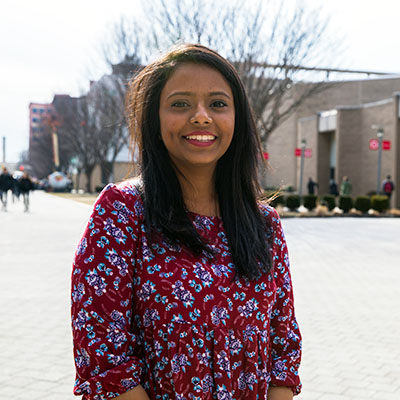
“I love this major. Merging biology with computer science will help me become a doctor.”
Chandani Patel
Class of 2019

“The course load prepares you to be a well-rounded professional.”
Juan Rios
Class of 2018

“The tight-knit academic community gave me a chance to stand out as a leader.”
Sneha Nambiar
Class of 2019
Featured Events
APR
27
Saturday | 9:00am
YWCC CAPSTONE PROGRAM
CTR 130 Campus Center Atrium
APR
27
Saturday | 10:00am
YWCC CAPSTONE PROGRAM Showcase
Multiple locations
MAY
1
Wednesday | 3:00pm
YWCC Annual Awards Ceremony
Campus Center Terrace
Latest News
Friday, April 19th 2024
NJIT Researcher: Neural Networks Can Mediate Between Download Size and Quality
Monday, April 8th 2024
NJIT Aims to Be an Innovation Nexus Under Its New Strategic Plan
Tuesday, April 2nd 2024